Sweep Dynamics and Reversal Patterns – July 19, 2024

Trading Analysis for July 19:Â

Introduction

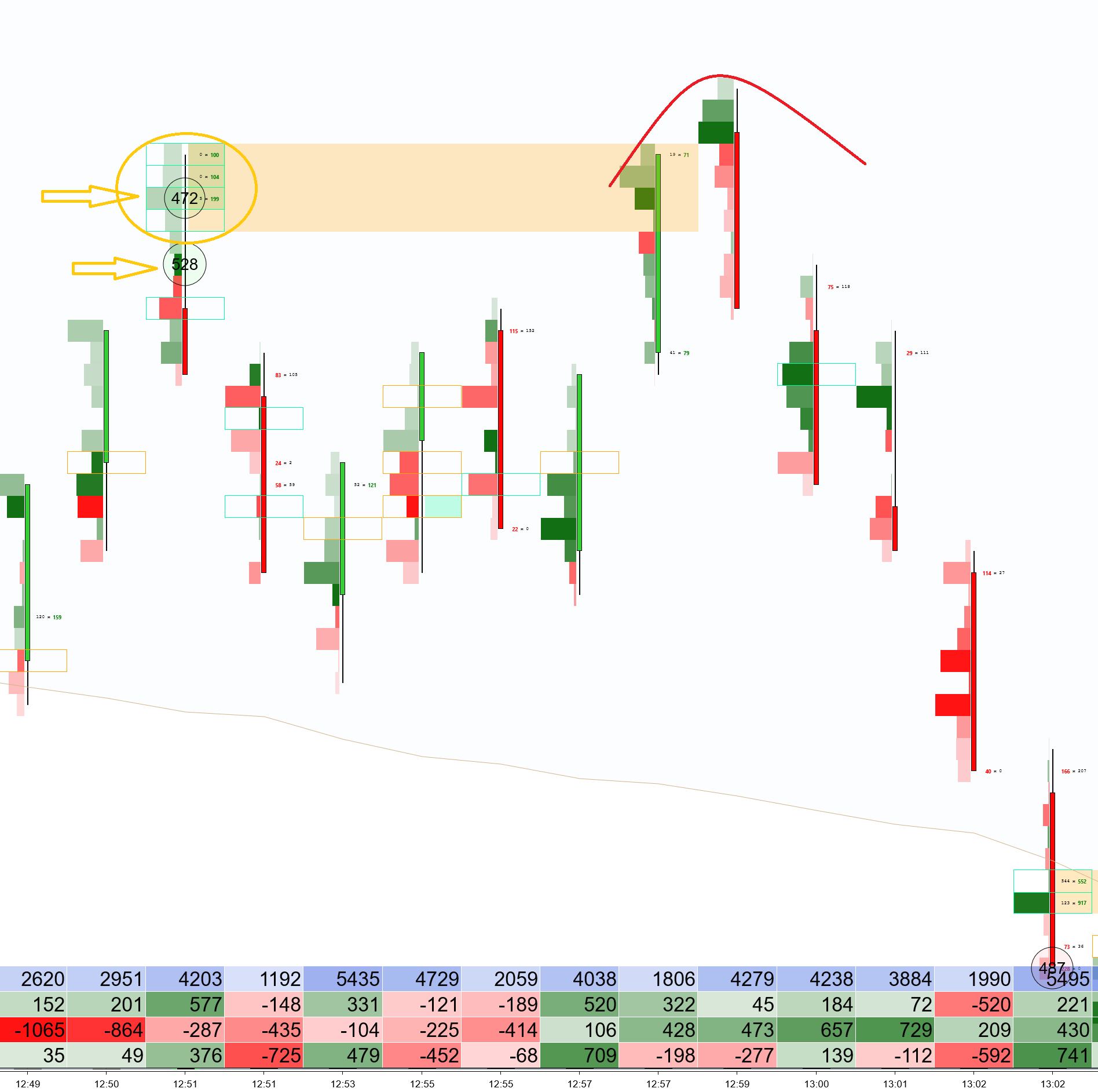
On July 19, 2024, as we approached 1:00 PM, a notable trading pattern emerged, illustrating the dynamics of aggressive buying and selling. In this analysis, we will examine the events around 1:00 PM and how they reflect on the S&P 500 using the Quarterly Theory, footprint charts, and Bookmap.

Quarterly Theory Analysis

The TradingView Quarterly Theory 1-minute diagram highlights the key area of focus. This diagram effectively demonstrates a scenario where aggressive buyers reach a certain price level, only to be overtaken by aggressive sellers, leading to a reversal.

Observations

Footprint and Bookmap Charts:

  • At 12:51 PM, a significant sweep is observed on both the footprint and Bookmap charts.
  • As the price revisits this level around 12:59 PM, the Bookmap shows that limit sellers are entering the market.
Trading Strategy

Short Trade:

  • If considering a short position, it is crucial to monitor specific indicators. The footprint chart highlights a distinctive candle pattern and delta histogram, indicating that sellers are losing strength. Additionally, the volume has decreased, signaling a potential weakening of the bearish momentum.

Key Indicators:

  • Candle Pattern: The footprint chart reveals characteristic candle formations around the reversal point.
  • Delta Histogram: The histogram shows a decline in selling pressure.
  • Volume: A drop in volume confirms reduced bearish activity.

Conclusion

The analysis of July 19 provides valuable insights into market behavior around significant trading hours. By observing the aggressive buying and selling patterns and key indicators on the footprint and Bookmap charts, traders can make more informed decisions about entering or exiting positions.

Analyzing the S&P 500 Market Close on July 15, 2024

Introduction

As we approach the market close on July 15, 2024, at 15:52, we enter what I call the “golden zone” or “sunset” period for the S&P 500. This is a critical time for traders as it represents the final trading moments of the day. Missing this window means waiting until the next day for new opportunities.

Observations Leading to the Close

Volatility in the Final Minutes

Starting in Q3, it’s crucial to monitor the volatile price movements as the trading day winds down. The price touches the second VWAP standard deviation line from below, even dipping underneath it. According to traditional trading theories, this suggests that the price may be undervalued.

Key Observation: The price moving below the second VWAP standard deviation line indicates potential undervaluation.

Footprint Chart Analysis

For this analysis, the footprint chart is set to a 10-range mode, providing a more uniform view of price movement.

Absorption at 15:51: There is an observable absorption at this time. Following this, the footprint chart indicates a strong downward price movement, forming a bearish imbalance. This could be referred to as an FVG (Fair Value Gap) on a traditional chart. In the same price range, a bullish FVG forms as the price starts to move upward, signaling a potential buying opportunity.

Cumulative Volume Delta Indicator: The CVD indicator shows a price reversal (indicated by a purple arrow), further confirming the potential upward movement.

Significant Reversal at 15:53: The volume spikes significantly at this time, marking a clear reversal point.

Trading Strategy: How Long to Hold the Position?

Once a long position is established, the key question is: how long should it be held?

Bookmap Heatmap Analysis: The Bookmap heatmap can help answer this. By focusing on the SVP (Session Volume Profile) indicator, traders can identify the price level with the highest volume, which serves as a target for exiting the position.

Conclusion

The analysis of the final moments before the market close on July 15, 2024, highlights the importance of monitoring key indicators such as VWAP, footprint charts, and volume profiles. By understanding the dynamics at play during this volatile period, traders can make informed decisions and potentially capitalize on the price movements.

OrderFlow of S&P 500 for July 1, 2024

Introduction

In this analysis, I aim to determine the market impact of several economic news releases on July 1, 2024, focusing on the S&P 500.

Key Observations

Economic News Releases

Several significant economic news releases occurred on this day:

  • 9:45 AM: USD Final Manufacturing PMI: 51.6 (previous: 51.7, expected: 51.7)
  • 10:00 AM: USD ISM Manufacturing PMI: 48.5 (previous: 49.2, expected: 48.7)
  • 10:00 AM: USD ISM Manufacturing Prices: 52.1 (previous: 55.8, expected: 57.0)
  • 10:00 AM: USD Construction Spending m/m

ICT Strategy (Inner Circle Trading)

According to the ICT strategy, the “silver bullet” times for trading are between 3-4 AM, 10-11 AM, and 2-3 PM New York time. If significant economic news is released during these times, the trading window can shift by an hour. The silver bullet strategy suggests these times due to high trading volumes, offering good opportunities for FVG-based trading, considering liquidity levels.

Quarterly TheoryÂ

As shown on the Quarterly Theory diagram, the height of the 3-hour candle matches the 2-hour candle. The Bookmap heatmap indicates high volume limit orders above this level, while in the opposite direction, the diagram shows almost no activity at the marked time.

Footprint Diagram

Note that the time zone on the footprint diagram is still shifted. Subtract one hour to get the correct New York time.

Delta Change Observations

At 3:03, it is interesting to observe the delta change value. This value shows the delta change of the previous candle. At this time, we see that the price rejects the previous level with a higher delta change, indicating a decreasing trend.

Notable Candle Observations

At 4:39 and 4:51, we notice positive absorption within bearish candles. This observation suggests a further decrease in price. I will revisit the price movements around the news events later.

Bookmap Analysis

In the Bookmap analysis, it is evident that there is an enormous amount of red-colored limit sell orders above the 5541 price level. Below this level, the heatmap shows almost no activity, indicating a lack of buying interest. The price is currently at the first VWAP standard deviation, suggesting it is significantly overvalued.

Conclusion

Based on the analysis, including delta shifts, ICT strategy times, and Bookmap observations, we can conclude that the market shows a tendency towards a decreasing trend, especially highlighted by the significant delta changes and absorption levels noted. The Bookmap analysis further supports this with the significant sell orders above 5541 and the price being at an overvalued level according to the VWAP standard deviation.